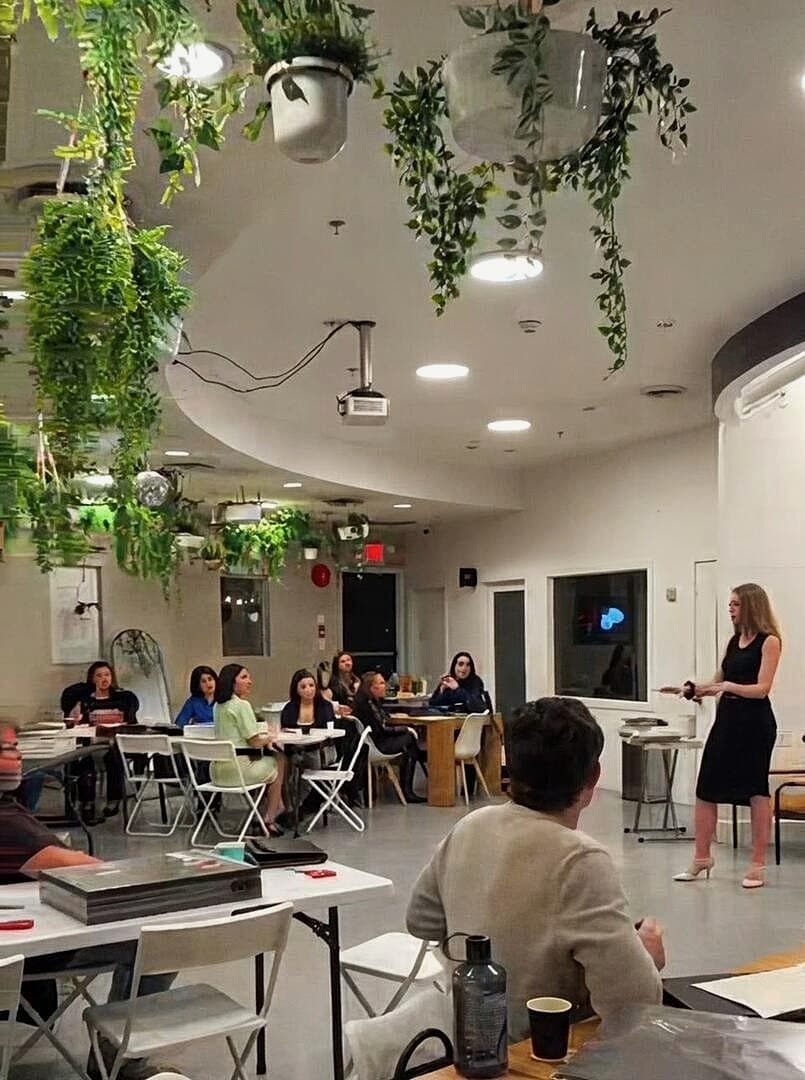
I was told I’d never speak. Now I teach workplaces how to listen.
Deaf since age two, I learned early to read what people don’t say: the gap between what’s spoken and what’s actually felt. That gap is where culture lives, and where most leaders miss the signal. Long before I had a framework for it, I had the habit: watching for what a room wasn’t saying out loud.
That instinct was shaped long before any career. I was bullied for years growing up, and eventually some of that pain turned outward; I ended up bullying a friend myself. I went back and apologized to her. I didn’t understand what that moment would eventually teach me until years later, building this company: curiosity before judgment. Before I ask what someone did, I want to understand what happened to them first.
I’ve spent 12+ years coaching leaders and teams. Somewhere in that stretch, I became the youngest Board Director in the history of the Canadian Institute of Workplace Harassment & Violence, not even 30, sitting across from people in their 60s. I spent the first while proving I belonged; by the end, they were coming to me for advice as often as I went to them. That role led to speaking during Global Workplace Bullying Awareness Week.
Around the same time, several years inside entrepreneurship incubators at District 3 and Balsam Montreal gave me a principle I still build by: divorce your solution, marry the problem.
Across very different environments (coaching athletes, living and travelling through 15+ countries, and interviewing 300+ employees across organizations), I kept seeing the same pattern. Different people. Different workplaces. Different circumstances. But disconnection sat underneath so many of the problems.
Living and travelling across 15+ countries exposed me to radically different ways people accept, communicate, and belong. Interviewing employees showed me something else: what leadership believes is happening and what employees are actually experiencing are often two very different things.
Exit interviews catch the moment someone quits. They almost never catch the eighteen months before it, where the real damage is done.
These problems don’t begin in the workplace. They show up there. And left unaddressed, they follow people home. At scale, that’s not only a personal cost; it’s an organizational and economic one.
I almost didn’t build TAKKLE at all.
Right as I was preparing to start testing the idea, I lost my brother. For a while, heartbreak took the wheel. I kept researching quietly in the background, but I wasn’t ready to move forward.
Losing him forced me to look at connection differently.
I had been so caught up in building my own life that I wasn’t always paying enough attention to his. That taught me one of the hardest lessons of my life: when we become disconnected from ourselves, we can miss important details happening right in front of us: including what the people we love may be carrying.
I can’t change that now. But I can decide what I do with what it taught me.
So I will always fight for people to reconnect to themselves first, because people who understand what is happening inside themselves are far better equipped to notice, understand, and connect with the people around them.
That belief sits at the centre of TAKKLE.
TAKKLE exists to close the gap between what organizations think is happening and what their people are actually experiencing.
I’m not the answer; I’m the catalyst.
The solutions are usually already inside your people. They just don’t always have the language, trust, structure, or systems needed to surface them.
My job is to find what’s really happening, create the conditions for honest dialogue, and build the systems that allow those changes to hold long after I leave.
And I don’t hand you a binder and disappear.
I stay in the work, build what fits your team specifically, and see it through until it holds under real pressure, not just in a workshop.